I know most of you want the same thing: to be found by the right people on Google, without gaming an algorithm or paying to get there. Well, Google’s just made that a little easier by rolling out something like a “favourite” button for websites.
It’s called Preferred Sources. It lets people tell Google which websites and creators they trust most, so those sites show up more in search results.
What is Google’s Preferred Sources feature
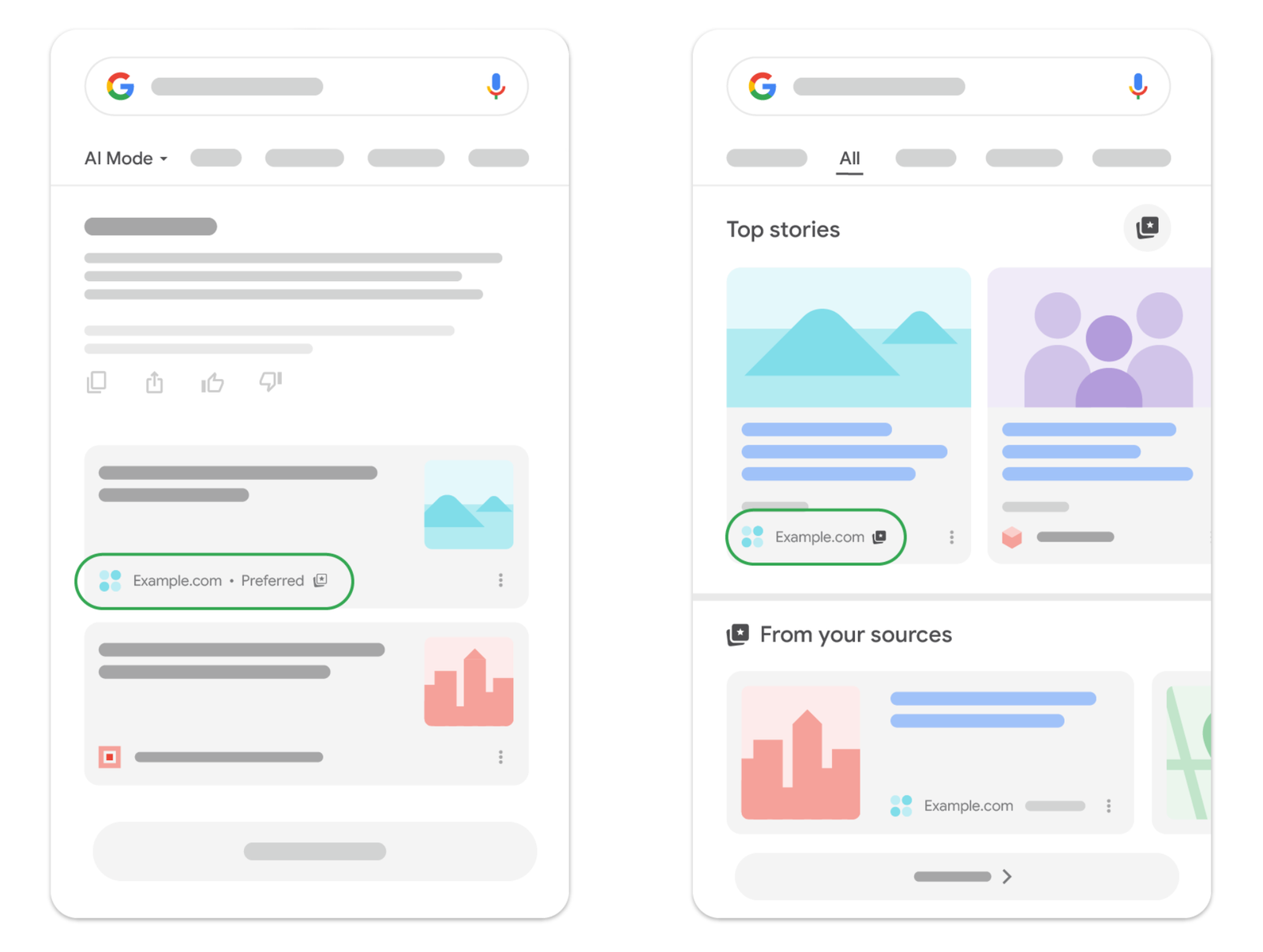
People can now visit their Google search settings and add a handful of sites they trust as their Preferred Sources. From then on, content from those sites gets a “preferred” label in Top Stories, AI Overviews and AI Mode.
Google says people are twice as likely to click through to a preferred source. Worth keeping in mind, given how many searches now happen in AI Mode. They’ve also reported that more than 345,000 unique sites have already been chosen by someone.
The great news is that this isn’t reserved for big news outlets. According to Google’s official guidance, any website that publishes fresh content is eligible to appear in the source preferences tool. If you’re publishing with any consistency, you’re in the running.
Why this matters if you’re a solo creative business
If you’ve read anything I’ve written before, you’ll know I bang on about one thing constantly: being found on Google comes down to being the kind of site people want to keep coming back to.
Preferred Sources rewards exactly that. Blogging for SEO reasons is a long game. But now your blog posts are doing something more immediate too. They’re landing you a spot on someone’s personal shortlist of trusted sites, the kind that gets highlighted every single time they search.
For a solo business owner without a marketing team, that’s a big deal. You’re not competing with a big publisher’s budget here. It comes down to one thing: is what you publish genuinely useful, specific and worth someone bookmarking you for? If you’re already known and liked within your space, with a loyal audience who keeps coming back, this is a feature that can genuinely work in your favour.
How to check if you’re eligible and be added to Google’s Preferred Sources
1. Check the source preferences tool
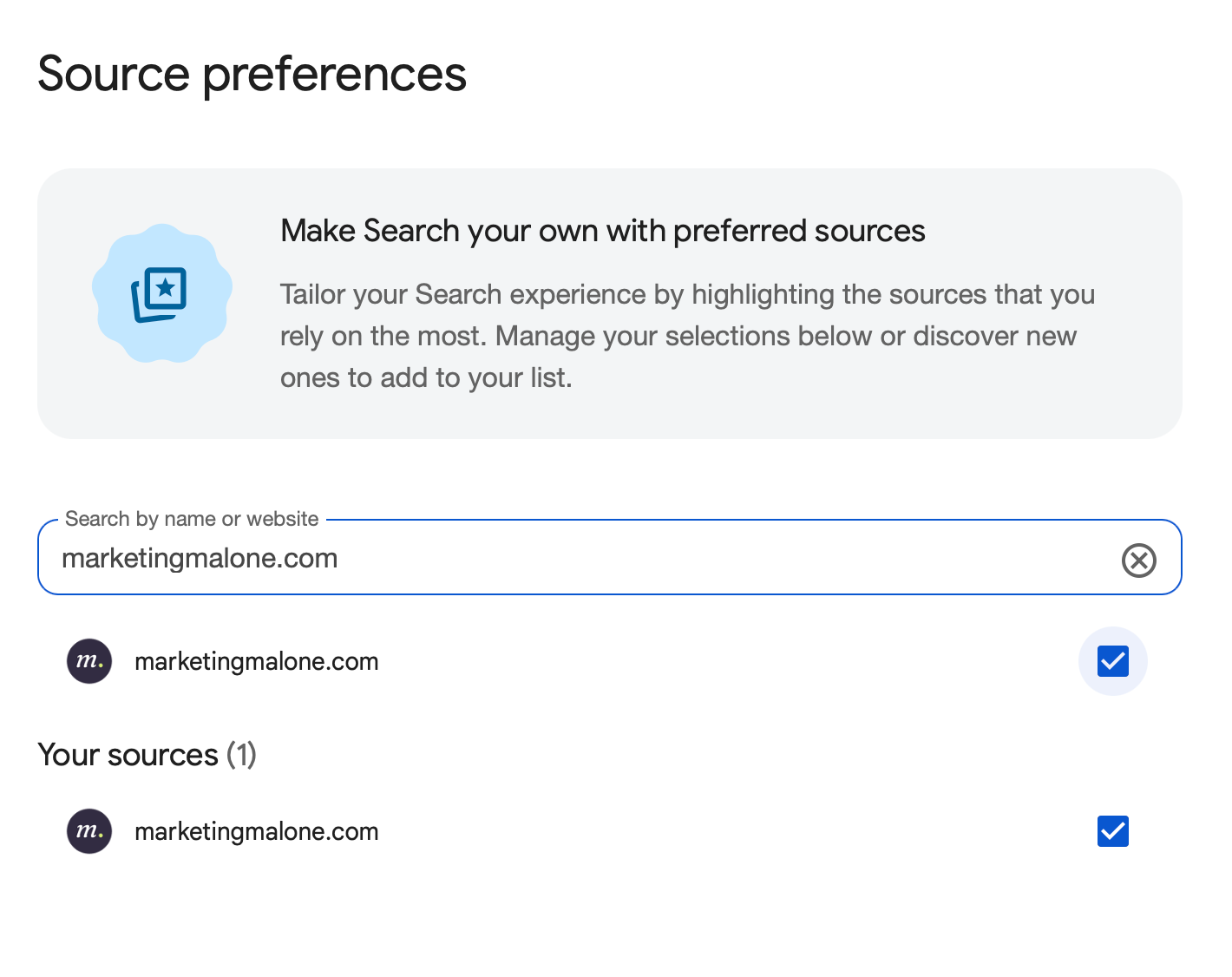
Search your own site at google.com/preferences/source to see if you already appear. If your site doesn’t show up, it’s likely because Google doesn’t know you exist yet, or doesn’t yet recognise you as a frequent publisher.
2. Publish something, regularly
You don’t have to publish new blog posts daily. Just consistently enough that Google can tell you’re an active, ongoing source rather than a site that had one good year in 2021 and then went ghost.
This is exactly why the blog maintenance work nobody wants to do, like re-optimising old posts or adding new ones on realistic keywords, actually pays off.
3. Point people to the deeplink
Google gives every eligible site its own direct link straight into the preferences tool: google.com/preferences/source?q=yourwebsite.com
Drop that link into your email sign-off and ask people to add you, so your site shows up recommended whenever it’s relevant to what they’re searching.
If this post’s been useful, here’s my link if you’d like to “favourite” this blog: google.com/preferences/source?q=marketingmalone.com. Just tick the box next to marketingmalone.com and you’re done.
4. Add the badge to your site
Use the deeplink above, plus the ready-made button assets Google provides, to add the badge to your site next to your other social links.
What to do with this
None of this replaces solid SEO fundamentals. It’s a layer on top of them, built for the readers you’ve already won over rather than a way of getting in front of a brand new audience. Which means the real work is still in earning that loyalty in the first place.
If you’ve been thinking “I should blog more”, this is a good nudge. The businesses building genuine trust and consistency with their content are the ones this feature is designed to reward.
If you’re not sure whether your site is even set up to be found in the first place, that’s exactly what my Google Gap Audit Workbook is for. It walks you through spotting the gaps between what your ideal client is searching for and what your website currently says, before you spend another minute publishing content Google can’t connect to the right person.
You’re good at what you do. Your clients love working with you. So why isn’t Google sending more of them your way?